
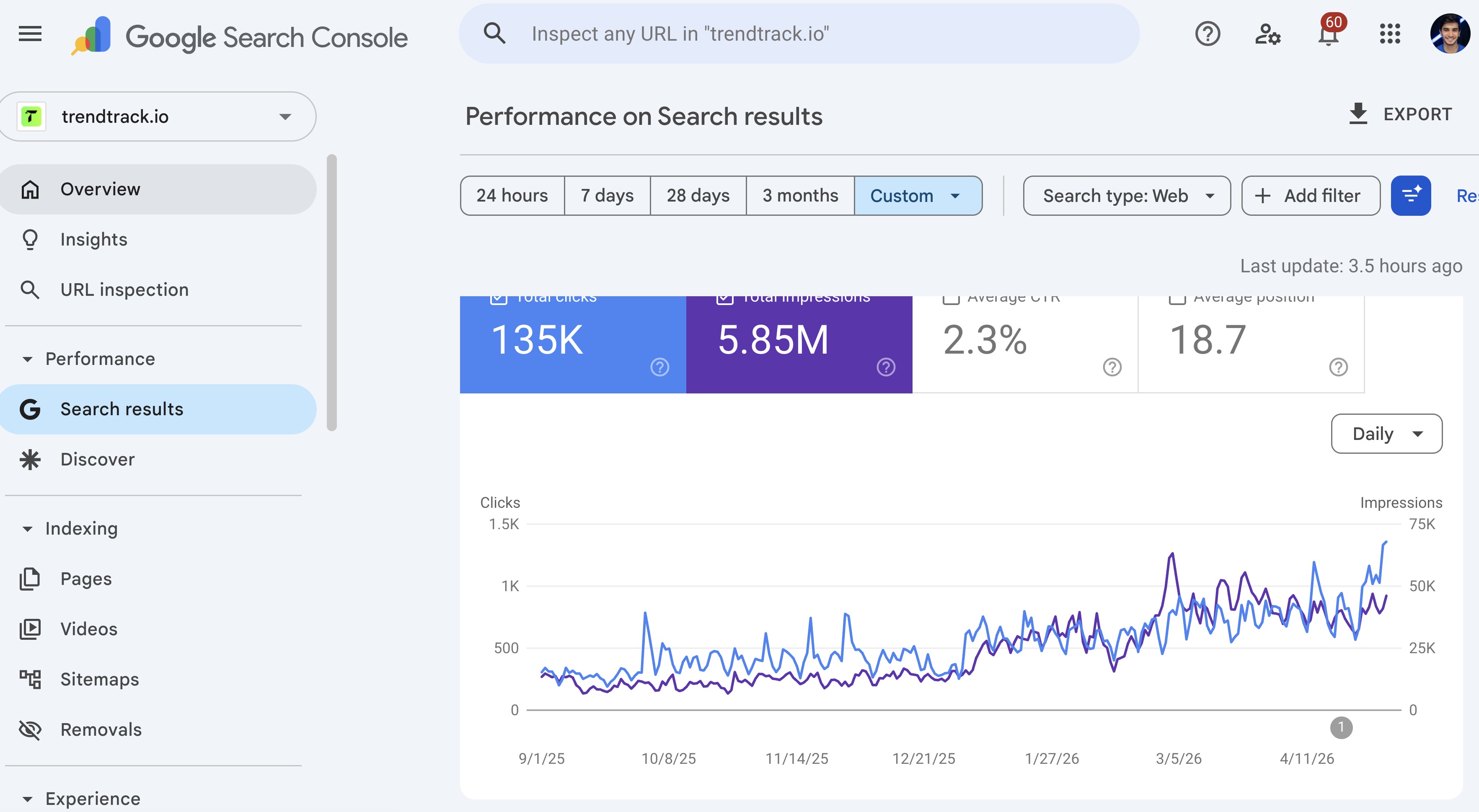
Trendtrack came to us with a strong product and almost no SEO system: no real content engine, no meaningful organic traffic, and no structured strategy for turning search demand into signups.
The product had the right ingredients for SEO. It helps ecommerce and Shopify operators spot winning products, analyze stores, and understand market signals. But the opportunity was scattered across dozens of buyer questions: product research, dropshipping trends, Shopify store examples, competitor research, ad spying, and category-specific workflows.
Our job was to turn that raw demand into a repeatable acquisition system.
The outcome in plain English
We started working with Trendtrack in June 2025. The first measurable organic traction appeared within 1–2 months, then accelerated as the content, free tools, internal links, and backlinks compounded.
By April 2026, Trendtrack was receiving more than 10K organic visits per month. More importantly, PostHog attributed 40 new paying customers in April alone to visitors coming through the blog and free tools. That April cohort represented approximately $4K in MRR added.
SEO brought in a new cohort of customers every month. MRR added measures the recurring monthly value of each new cohort; it is not the revenue generated during that month. To estimate total revenue, we stacked each month’s MRR added across the remaining months of the engagement. Using that method, we estimate that organic generated approximately $72K in cumulative revenue between June 2025 and April 2026.
April’s $4K in MRR added was also roughly 2x the monthly SEO investment. This comparison is a snapshot rather than a complete lifetime ROI calculation: April’s result came from the system built progressively since June, not from one isolated month of work.
Timeline
- June 2025 — starting point: Almost no meaningful organic traffic and no measurable recurring revenue from SEO. We learned the product, mapped the conversion paths, and started building the content and free-tool strategy.
- Within 1–2 months — first traction: The first pages and tools began receiving organic clicks. Revenue attribution was not yet available at this stage.
- November 2025 — ~2.8K monthly visits: Blog and tool traffic had become measurable in PostHog and continued rising month over month.
- January 2026 — ~5.6K visits and ~$1.7K MRR added: The customers acquired through organic that month represented approximately $1.7K in new monthly recurring revenue.
- February 2026 — ~7.6K visits and ~$2.4K MRR added: Both traffic and the recurring value of the new organic cohort continued growing.
- March 2026 — ~12.2K visits and ~$2.8K MRR added: Traffic more than doubled compared with January as the content, tools, internal links, and backlinks compounded.
- April 2026 — 14,295 visits, 40 customers, and ~$4K MRR added: April’s organic cohort delivered the strongest verified commercial result in the available data. By stacking the monthly cohorts from the start of the engagement through April, we estimate that SEO generated approximately $72K in cumulative revenue over the period.
The visit figures above come from PostHog sessions landing on the blog or free tools. The MRR-added figures are read from the PostHog cohort chart and rounded; only April’s exact value and customer count are shown directly in the available screenshot. The cumulative estimate is calculated as each cohort's MRR added × the number of months it contributed through April, then summed across cohorts. It assumes no churn during the period and is not an accounting export.
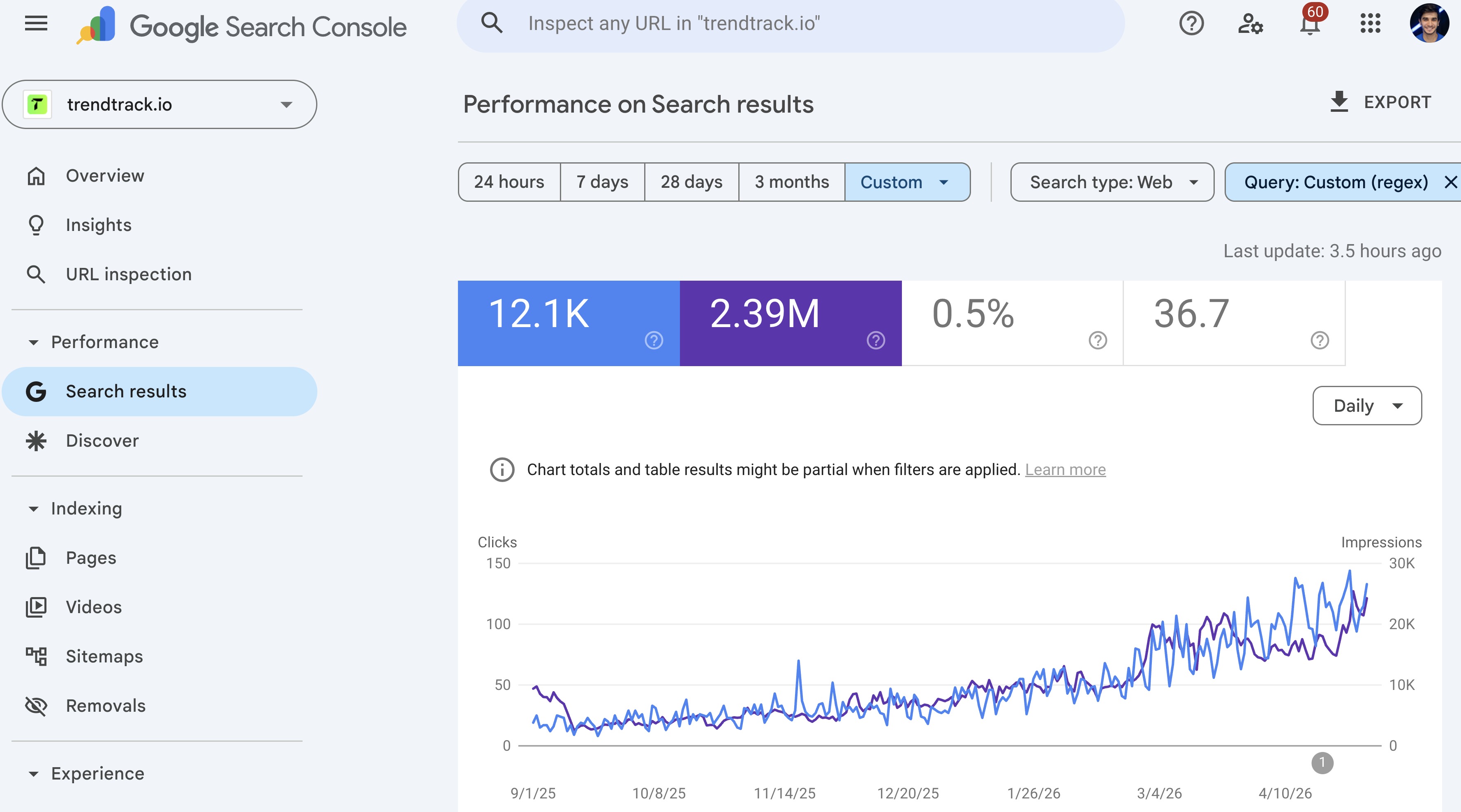
Unbranded organic growth after building the content system from scratch.
The view above excludes branded searches: 12.1K clicks and 2.39M impressions over nine months from people searching for problems, tools, and workflows rather than for Trendtrack by name.
1. We mapped the product into 5 search clusters
Before producing content, we spent time with the Trendtrack team to understand the product, watch demos, absorb the vision, and map how users moved from content to signup.
That mattered because Trendtrack was not a generic SEO play. The content had to do three jobs at once:
- Capture searches from ecommerce operators and Shopify founders.
- Educate readers on how to spot products, stores, ads, and trends.
- Show how Trendtrack made those workflows easier.
From there, we built the initial SEO strategy around five core content clusters using a cornerstone-style structure. Each cluster had a central strategic theme, supporting articles, internal links, and product-led CTAs.
We also created the first keyword research map, prioritized quick wins, and designed custom CTA blocks that could sit naturally inside the blog instead of feeling bolted on.
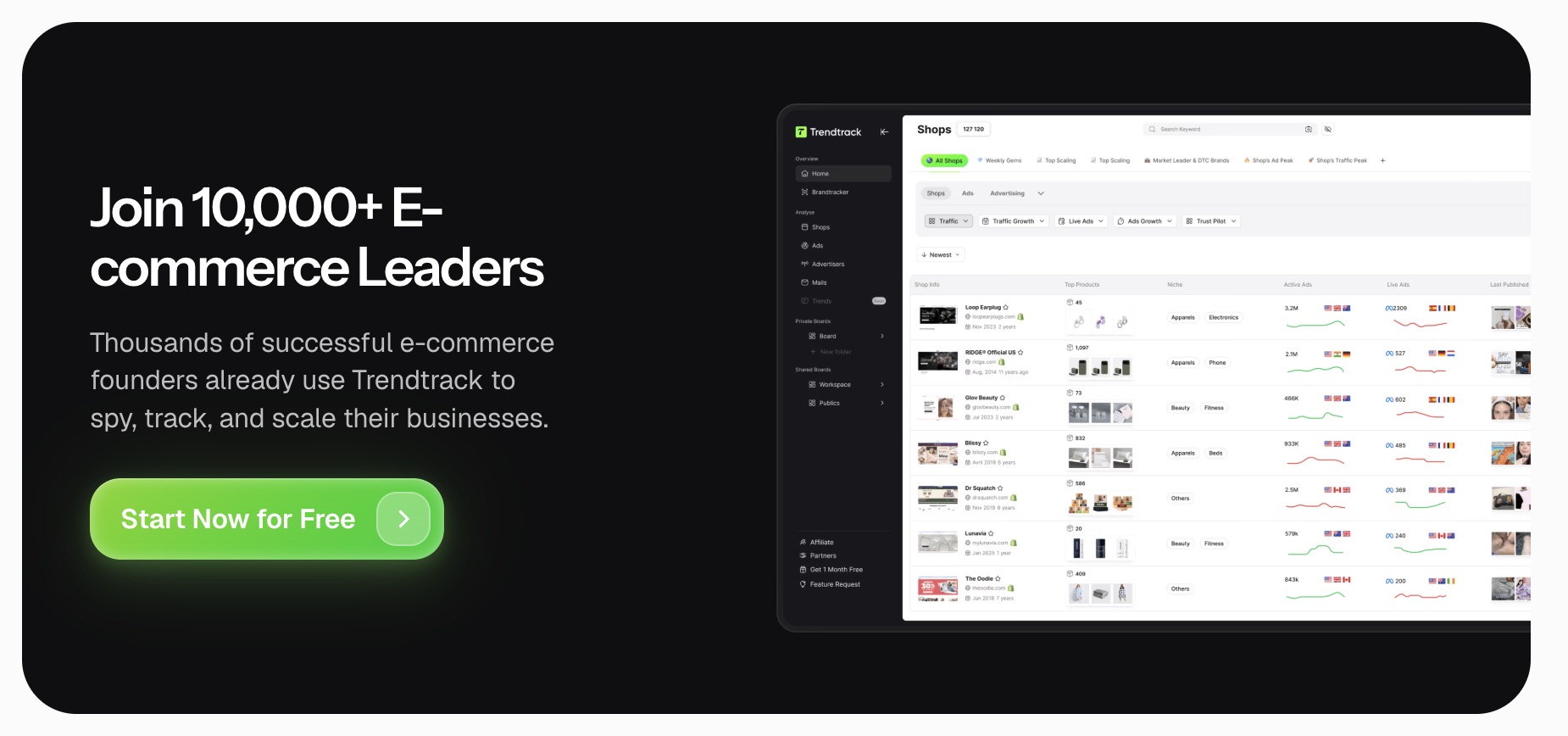
A custom CTA designed for the blog, not a generic banner pasted under every article.
2. We shipped product-led BOFU and MOFU content
Once the strategy was clear, we started publishing bottom-of-funnel and middle-of-funnel articles. The early focus was on topics that could either rank quickly or expose Trendtrack to people already looking for ecommerce research workflows.
Every article was built with a few rules:
- Use sourced and verified information, especially when discussing tools, products, or market claims.
- Add branded cover images and visuals so the content looked credible and shareable.
- Use proprietary Trendtrack data where it made the article stronger.
- Highlight the product naturally inside the article when it matched the reader’s problem.
- Keep internal links updated continuously, including after publication.
- Push link equity toward money pages and strategically important content.
This was not “publish and forget.” We kept revisiting articles after they went live, improving internal linking, strengthening product mentions, and updating pages that were close to breaking through.
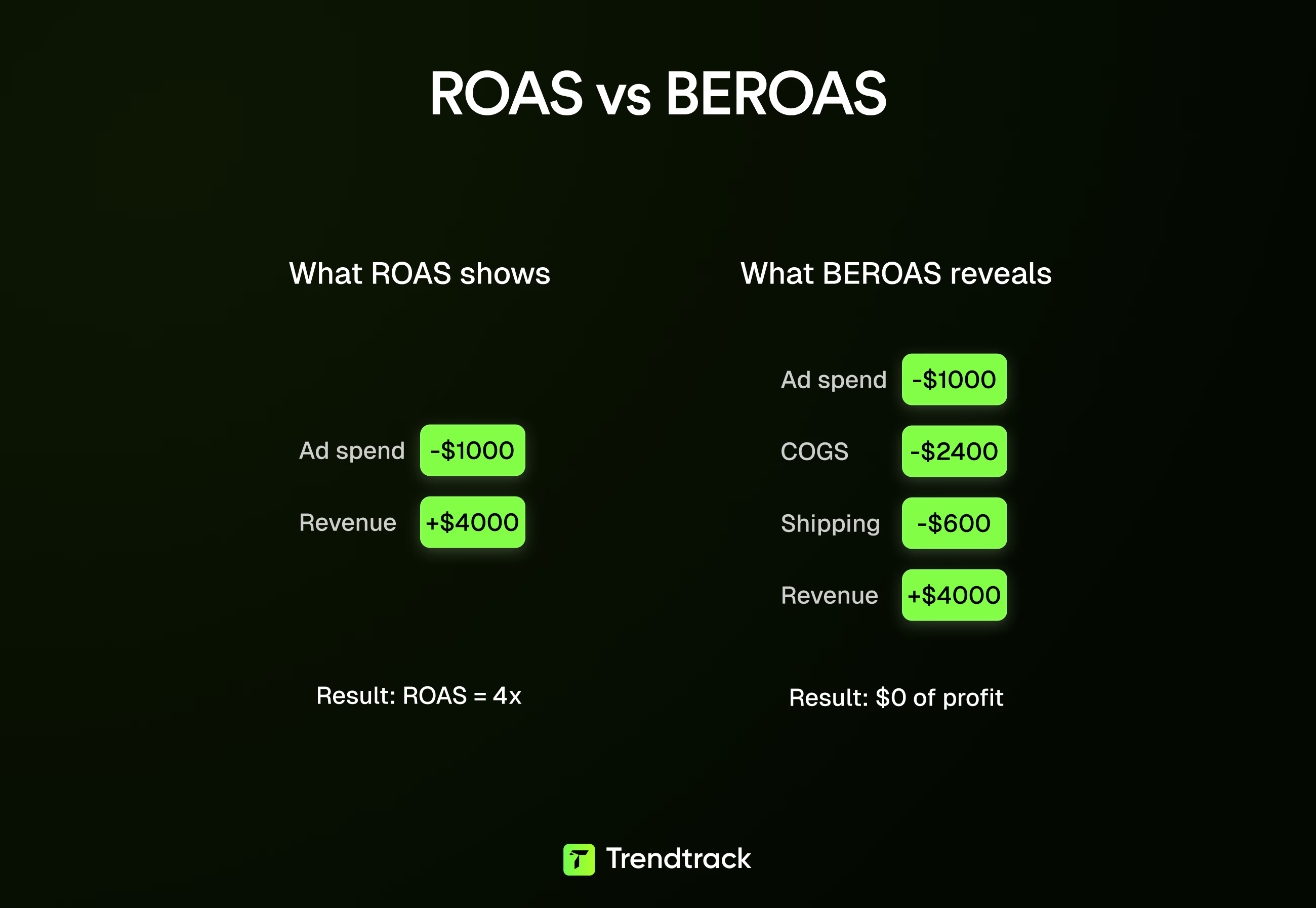
A branded visual created for Trendtrack's SEO content.
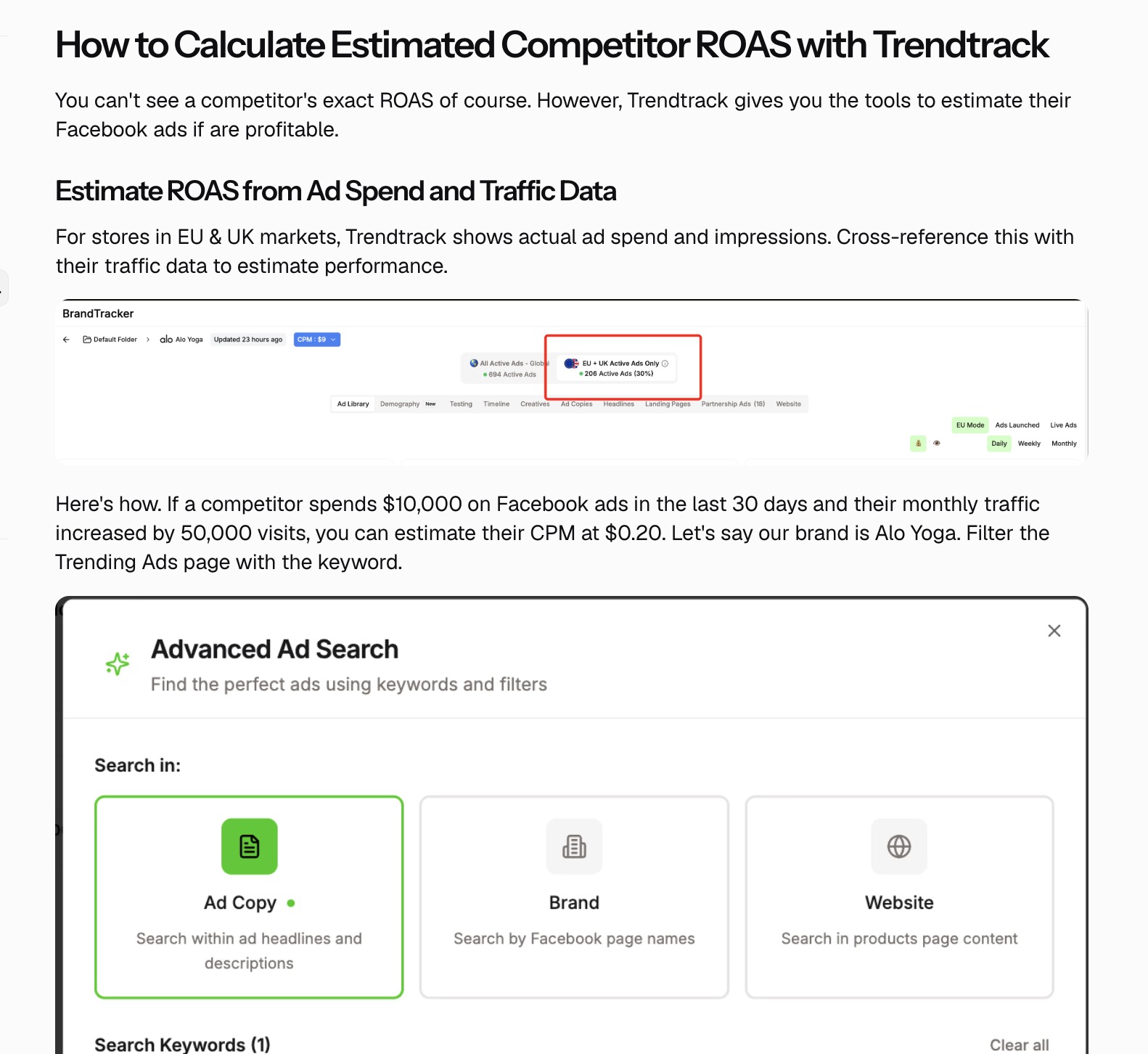
Product-led content: the product appears where it helps the reader solve the problem.
3. Free tools generated 8.3K organic clicks
For Trendtrack, some of the best SEO opportunities were not classic blog posts. The audience searches for calculators, lists, examples, and workflows that help them make decisions.
So we proposed and built a free tool strategy around assets that could attract qualified traffic and create a clearer path to product discovery.
The free tools gave the site another way to earn traffic beyond articles. Over twelve months, they generated 8.31K clicks and 1.19M impressions. They also created stronger internal linking opportunities because tool pages can sit closer to commercial intent than informational blog posts.
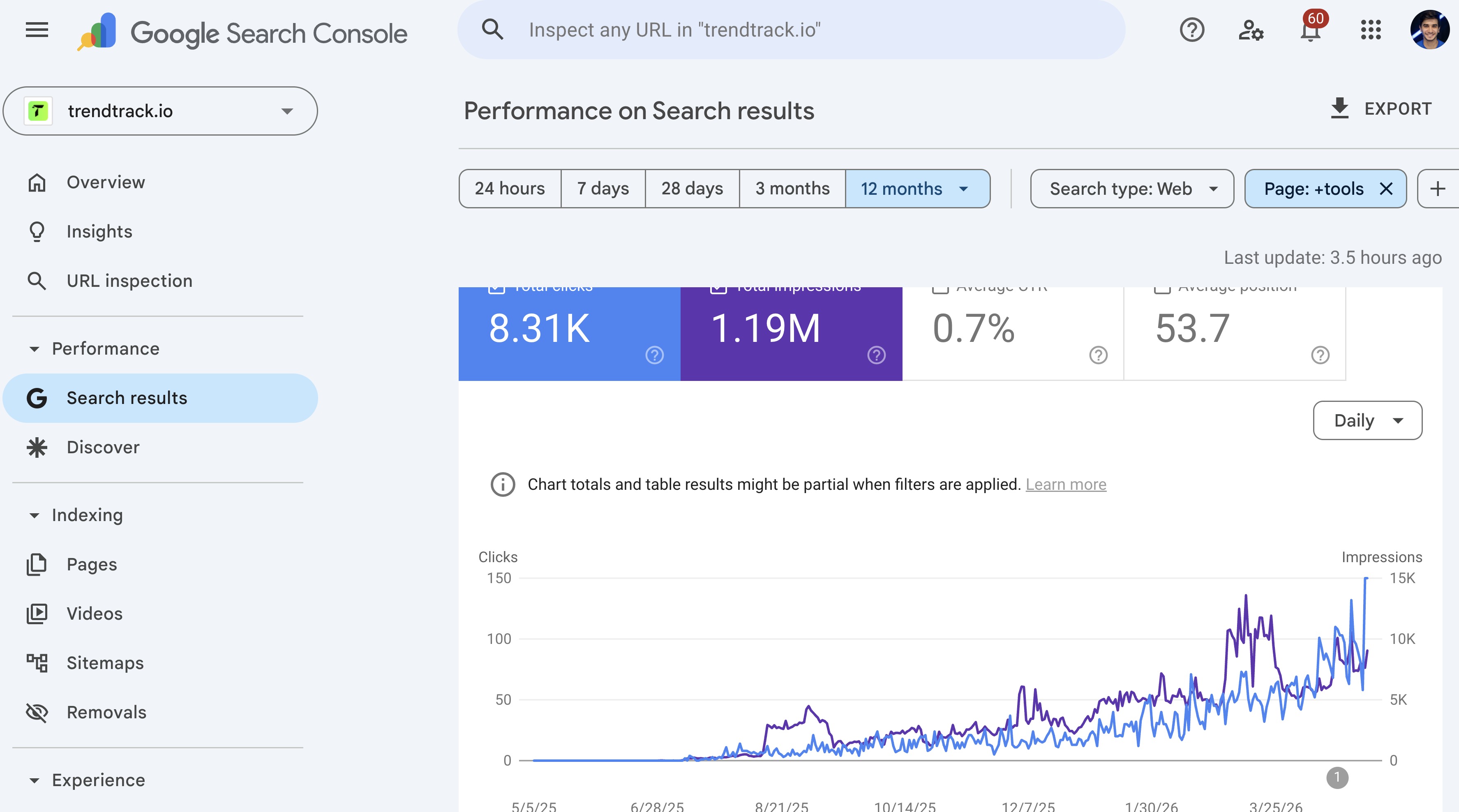
Trendtrack's free tools generated 8.31K clicks and 1.19M impressions over twelve months.
4. Organic added 40 paying customers in April
The goal was not traffic for traffic’s sake. We looked at content performance, conversion paths, and revenue signals every month.
That meant:
- Reviewing which articles were gaining impressions but needed better titles, intros, links, or content depth.
- Updating articles that were close to ranking well.
- Identifying pages that deserved more internal links.
- Suggesting new content based on what was already showing traction.
- Reporting monthly so the team could understand what was working.
PostHog connected blog and tool visits to signups, customers, and revenue. This let us measure the new customer cohort acquired through organic every month rather than stopping at rankings and clicks.
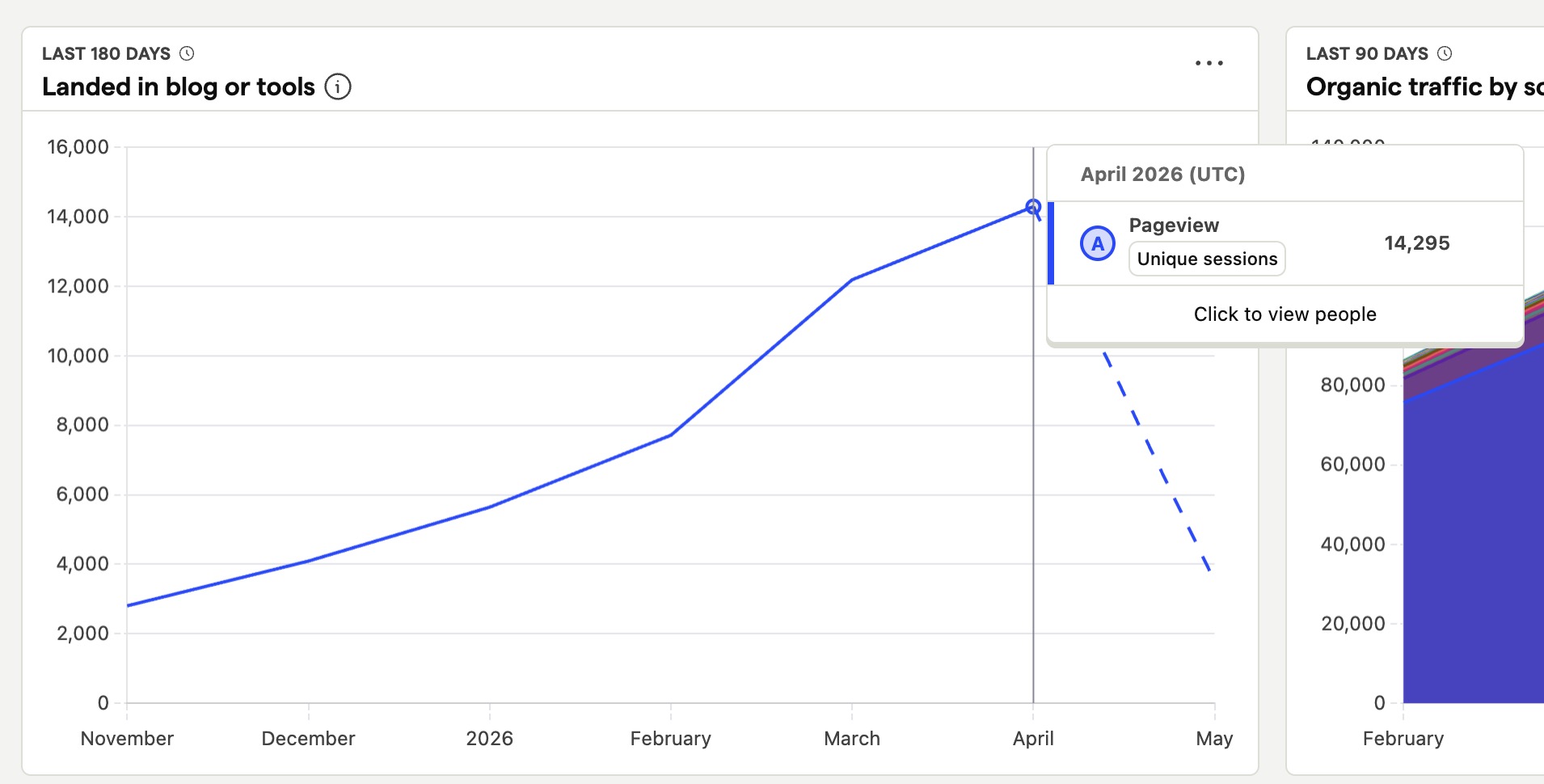
Blog and tool visits tracked in PostHog.
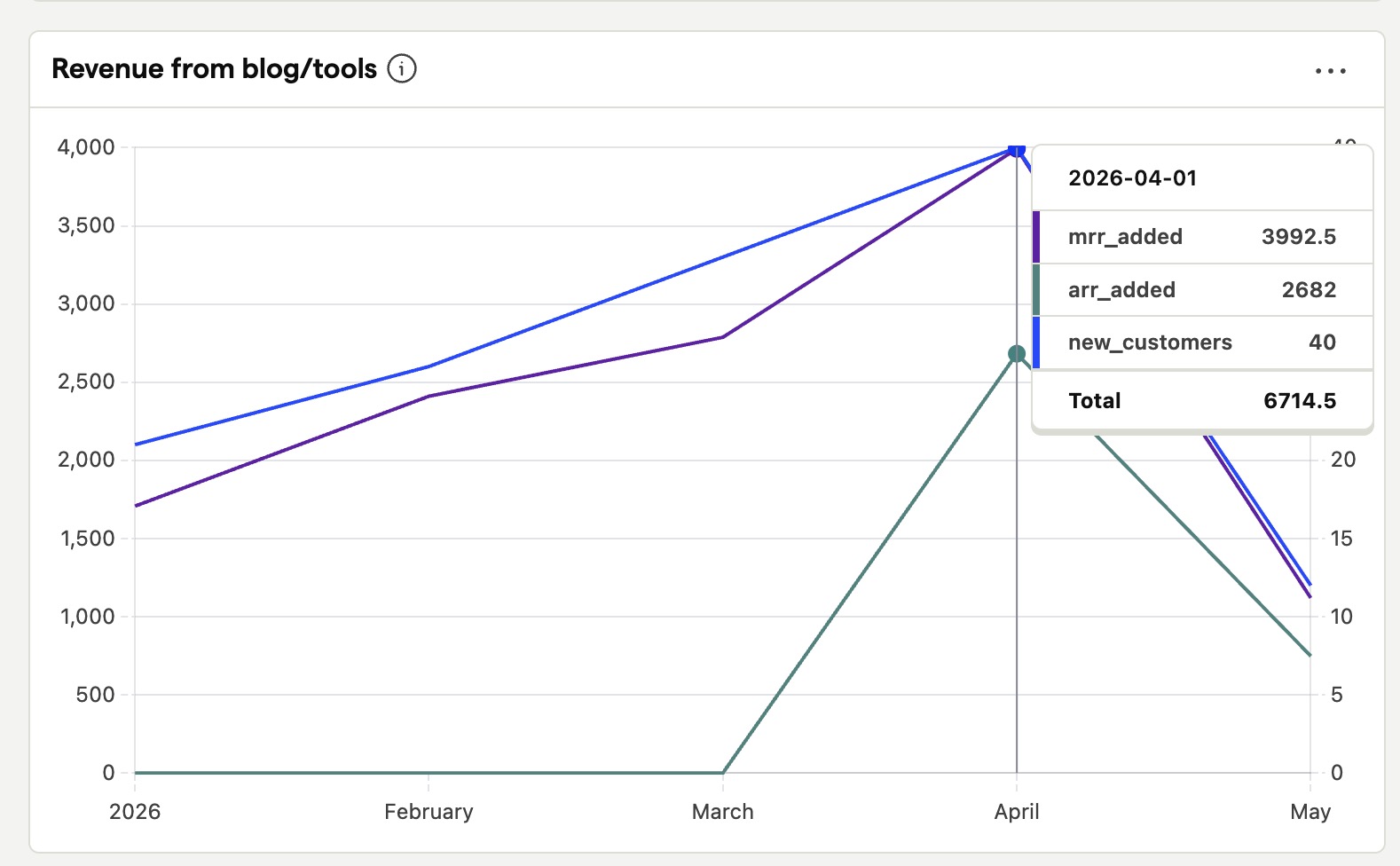
In April, 40 new customers from the blog and free tools represented approximately $4K in MRR added.
5. We built authority with relevant SaaS backlinks
Content alone was not enough. Trendtrack also needed authority.
We acquired and exchanged backlinks with SaaS websites in the same broad industry, keeping the focus on relevance. The goal was not to collect random links. It was to increase authority from websites that made sense for ecommerce, marketing, SaaS, and operator audiences.
That authority layer helped support the content clusters and made it easier for new pages to compete.
6. We kept widening the SEO surface area
As the content engine started working, we suggested additional SEO plays beyond the initial article roadmap:
- Commercial page optimization for higher-intent visitors.
- Programmatic SEO opportunities where Trendtrack data could support scalable pages.
- New internal linking paths between articles, tools, and money pages.
- LLM prompt tracking to monitor whether Trendtrack was appearing in AI-generated answers over time.
- Relevant YouTube video ideas for searches where video results could increase visibility.
- Reddit threads where the team could contribute useful answers and earn offsite visibility.
This is the difference between “content production” and a real SEO system. The work does not stop once the article is live.
The result
Trendtrack went from almost no SEO footprint to a channel that brings in a new cohort of paying customers each month. The compounding happens twice: more pages and tools earn visibility over time, while previously acquired customer cohorts continue contributing recurring revenue.
The result came from combining search discovery, product-led content, free tools, authority, and continuous iteration—not from publishing isolated articles and waiting for traffic.
Total organic growth across Trendtrack's SEO engine.